Norway becomes H2SITE’s launchpad for maritime hydrogen solutions

Norway represents a highly relevant environment for this technology. The country combines a strong maritime heritage with clear climate ambitions and a pragmatic, goal-oriented approach to innovation and first-of-a-kind projects. Norway is already assessing the use of ammonia onboard vessels in commercial operations. With a local presence, H2SITE aims to work directly with Norwegian shipowners, shipyards and technology partners to adapt its systems to real vessel profiles and operating conditions.
Founded in Bilbao in 2020, the Spanish innovator H2SITE specializes in onboard ammonia cracking technology, enabling ships to produce high-purity hydrogen directly from ammonia. The approach tackles one of the key barriers to ammonia-based propulsion and fuel cell adoption: converting ammonia back into hydrogen efficiently, reliably, and at low cost.
“When we evaluated where to expand, Bergen stood out as the obvious choice for our maritime ambitions,” says Tomás Crespo, Maritime Business Development Manager and responsible for Norwegian operations at H2SITE. “I firmly believe Bergen and Norway represent the fastest path for H2SITE to achieve commercial-scale adoption in the maritime sector.”
Solving a critical bottleneck: efficient, high-purity hydrogen onboard
Vessel types such as RoRo, bulk carriers, platform supply vessels and tankers face technical and operational barriers. While ammonia-to-power 4-stroke engines are approaching commercial readiness, challenges remain at low loads, including ammonia slip and the need for pilot fuel.
Onboard cracking allows shipowners to benefit from liquid ammonia storage and established logistics while producing hydrogen that enhances combustion and enables the use of fuel cells for high-efficiency auxiliary power. Hybrid solutions, as well as full fuel-cell propulsion, provide practical pathways towards ammonia-fuelled zero-emissions vessels. Regulatory developments reinforce this direction. While global frameworks such as IMO regulations continue to evolve, FuelEU Maritime and the EU Emissions Trading System are already shaping investment decisions and will progressively tighten over time.
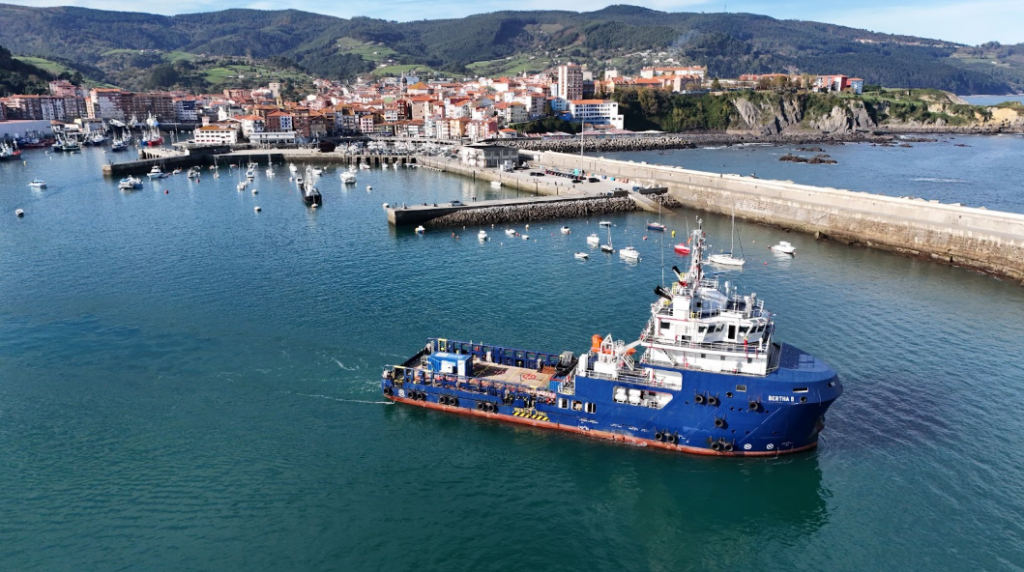
H2SITE has built and operated ammonia crackers for more than 6,000 hours, including extended continuous operation in relevant environments. Maritime-focused projects such as H2Ocean and APOLO
Find the hydrogen solution that fits your business best
Learn more__
Why Bergen: proximity, pilots, and a mature maritime ecosystem
For H2SITE, Bergen’s value is practical as much as strategic. Often described as Norway’s maritime capital, the city brings shipowners, designers, offshore operators, and technology suppliers into close reach—creating ideal conditions for rapid pilots and real-world feedback.
“Here we find all players aligned with our target market,” Crespo notes. “And we have proximity to key PSV and short-sea fleets for rapid pilot deployment and operational learning.”
Bergen is also positioned as a gateway to Norway’s west coast energy corridor, where offshore wind development, hydrogen production, and maritime logistics converge—reinforcing the city’s role as a proving ground for next-generation energy solutions.
Strong public support for pilots and early-stage deployment
H2SITE Norway is positioned as a platform for collaboration. The next step is pilot and demonstration projects that allow systems to be integrated and operated under realistic conditions. “The technology is proven; the priority now is implementation of the product and operational learning,” said Tomás Crespo, Maritime Business Development Manager at H2SITE Norway. “We are looking to work with Norwegian shipowners and shipyards that want to take a measured, forward-looking approach to decarbonisation.”
Looking ahead, the coming year will be about projects and execution deploying systems in real operating environments, gathering operational data and refining solutions in close cooperation with the Norwegian maritime industry. This strategic initiative highlights H2SITE’s dedication to addressing one of the key challenges in maritime decarbonisation: enabling efficient and economically viable onboard hydrogen production. By making hydrogen available at sea for both propulsion and auxiliary power systems, we are actively supporting the transition toward a cleaner and more competitive future for the shipping industry.
Norway’s hydrogen direction: maritime as a priority
Norway launched its national hydrogen strategy in 2020 and followed with a roadmap in 2021, outlining ambitions for hydrogen production and use across transport and industry. The long-term vision is that by 2050, hydrogen will be a mainstream fuel for both coastal waters and long-distance shipping. Key elements include a technology-neutral approach, strong alignment between climate goals and industrial value creation, significant support for pilot projects and infrastructure, and leveraging renewable energy resources—including hydropower—for green hydrogen production.
Related posts